
The agents your teams build, used by every team.
Most agents never leave the team that built them. Cartesian packages, releases and offers one team’s agents to every other team, inside the tools people already work in, the moment a task calls for one.
Coming soon to
- Claude
- Microsoft Copilot
- ChatGPT
- Web apps


 New chat
 Chats
Chats Projects
 Artifacts
 Code
CodeSeptember performance report
I need the September performance report for Operations by Thursday. Same format as August.
Surfaced from your catalogue
- Used beforemonthly-performance-reportv3.1 · released · Finance OpsBundle of 3 agents, run in orderUsed beforeUsed by 7 teamslast run yesterday
- trend-analysisv1.4 · released · Data OfficeUsed by 3 teams
Showing 2 of 4 matches
Our process is to pull the September figures, draft, and check every number. That is three agents, run in order. Want me to run them?
Nothing to install. It runs here, inside your account.
Yes, run all three.
September performance report
- running:Pulled September figures from four sourcesData agent
- pending:Drafted the report against the Operations templateReport agent
- pending:Checking 42 figures against sourceQA agent
- pending:Flag anything that moved more than 10 percentQA agent
- pending:Draft to you for review. Nothing sent.Claude
Logged to Operations · run 588
Here's the September draft, in the Operations template. Two figures moved more than 10 percent; I've flagged them. Nothing's been sent.
September performance reportDocument · Draft
- Summary for the Operations review
- Results by business unit, against August
- Two figures flagged for Finance to confirm
- Next month's watch list
One team’s agents, offered and used in every team.
Cartesian is the distribution and release platform that turns the agents one team builds into capability every team uses.
The moment they need it
Cartesian reads the task a person is working on and offers the agent for it, inside Claude, Copilot or the web app they are in, the moment they need it.
Every team, every run
Every agent is released once, reaches every team at the version you released, runs the way it was designed, and proves what it delivers.
“I need the September performance report for Operations by Thursday.”
monthly-performance-report
v3.0 · released · Finance Ops
Eliminate agent silos.
One team publishes an agent. Each release reaches everyone using it at the version you set, more teams pick it up, and nobody rebuilds what another team already built.
monthly-performance-report spreads across 7 teams (Finance Ops, Operations, Sales, Support, Engineering, Legal, Marketing) as new versions land. v1.0: written in Finance Ops. v1.2: written in Operations. v2.0: written in Sales. v3.0: written in Finance Ops, picked up by Support, Engineering, Legal, Marketing.
Workflows that run as designed.
Your agents depend on each other. Cartesian packages them into one workflow, so you set the order, the dependencies and the pinned versions once, and they are enforced on every run.
monthly-performance-report
v3.0 · released · Finance Ops
- 1Data agentMonthly, 1st, 9:00
- 2Report agentDepends on 1
- 3QA agentDepends on 2
Every run, in order
- 1 Sep · run 588In order, on time
- 1 Aug · run 5412 waited 14 min for 1
- 1 Jul · run 497In order, on time
Measure the outcome of every agent run.
Cartesian links every run to the task behind it, so you can show leadership what each agent solves, what it costs, and where demand isn’t being met yet.
Cost per outcome
What each solved task costs, by team and by agent.
Workflow gaps
The tasks people ask for that no agent covers yet.
Agent churn
The agents people stop using, and when.
Total ROI
What your agents return against the baseline you set at the start.
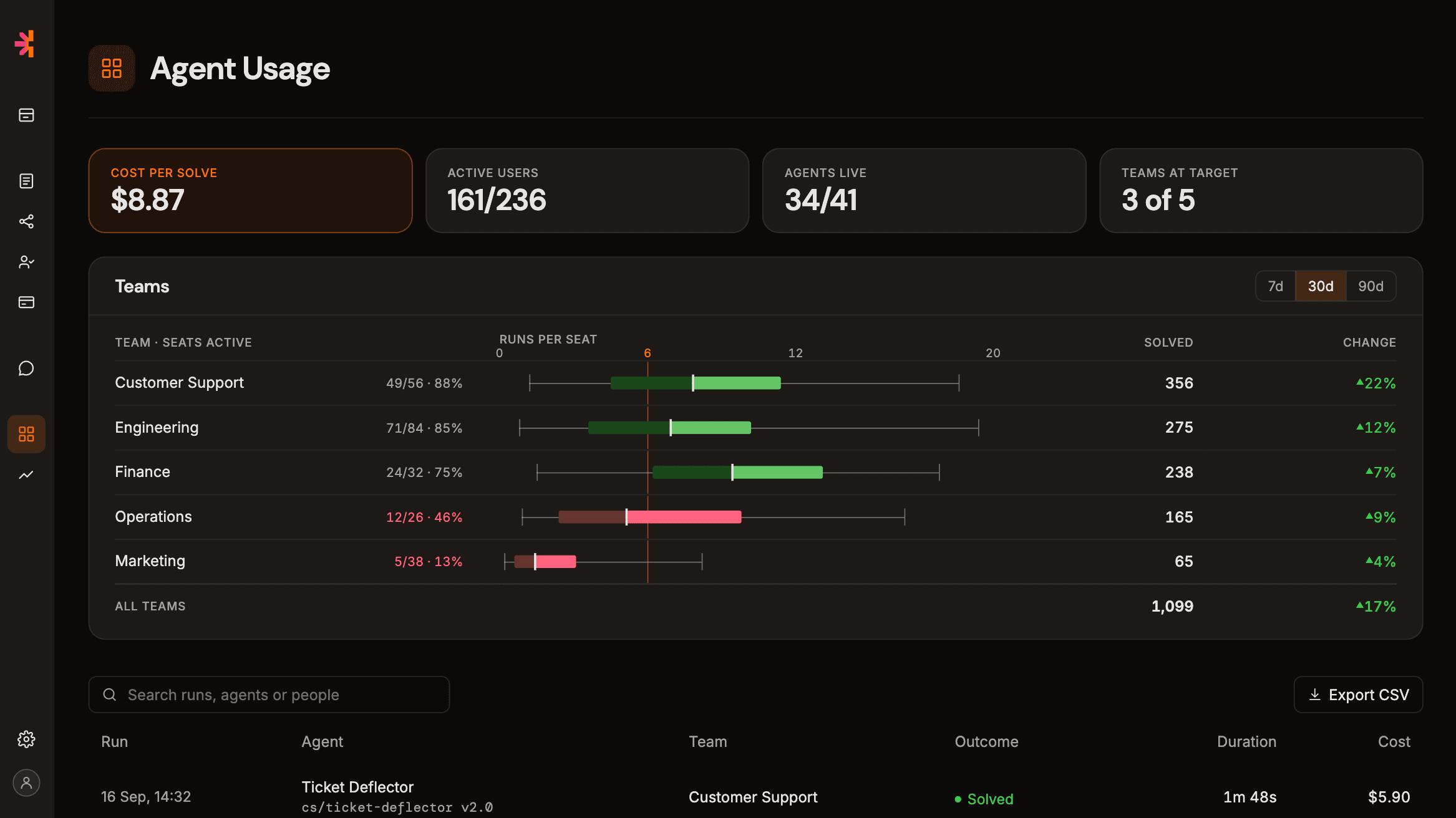
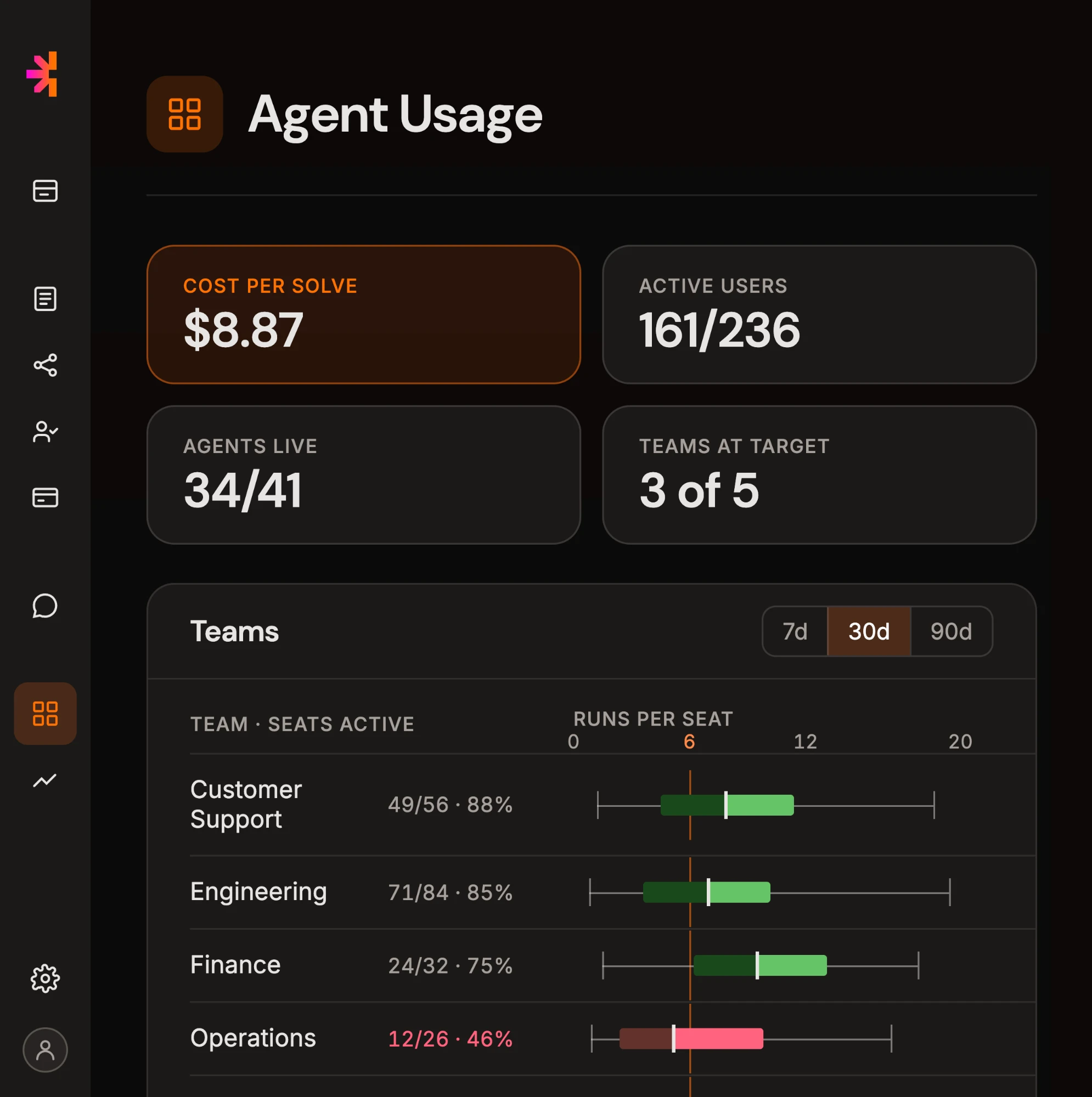
Fill any gaps with external agents.
Cartesian shows you the tasks your agents don’t cover yet. Release an external agent to fill the gap, and Cartesian offers it the same way as your own, inside the tools your teams already use.
Workflow gap
“Build a dashboard of this quarter’s pipeline by region.”
Sales · asked 38 times this month · no agent
Surfaced from your catalogue
 dashboard-generatorExternal
Built by Synoptic Labs · released to Sales
Your stack gets agents built and governed. Cartesian gets them to the people who need them.
Build
- LangChain
- Google ADK
- Amazon Bedrock AgentCore
Govern
- Okta for AI Agents
- Microsoft Entra Agent ID
- and others
Index
- AWS Agent Registry
- Google Cloud Agent Registry
- and others
Package
- Versions and dependencies
- Release rules
Surface
- Claude, Copilot, web apps
- At the moment of the task
Run
- In your cloud
- In order
Measure outcomes
- Cost per solved task
- Usage gaps
Security and control, built in.
SOC 2
Private
Runs inside your own cloud account, and reads the conversation there to make the match.
Secure
Your identity provider and your policies apply to every run.
Data
Your agent code, your prompts, and your agent activity stay in your environment.
Access
Your identity provider decides who can call what.
Start with one agent. Watch every team use it.
Whether you own the agent budget or build the agents, this is where you start.
Join the waitlist.
Coming soon inside the tools you already use.